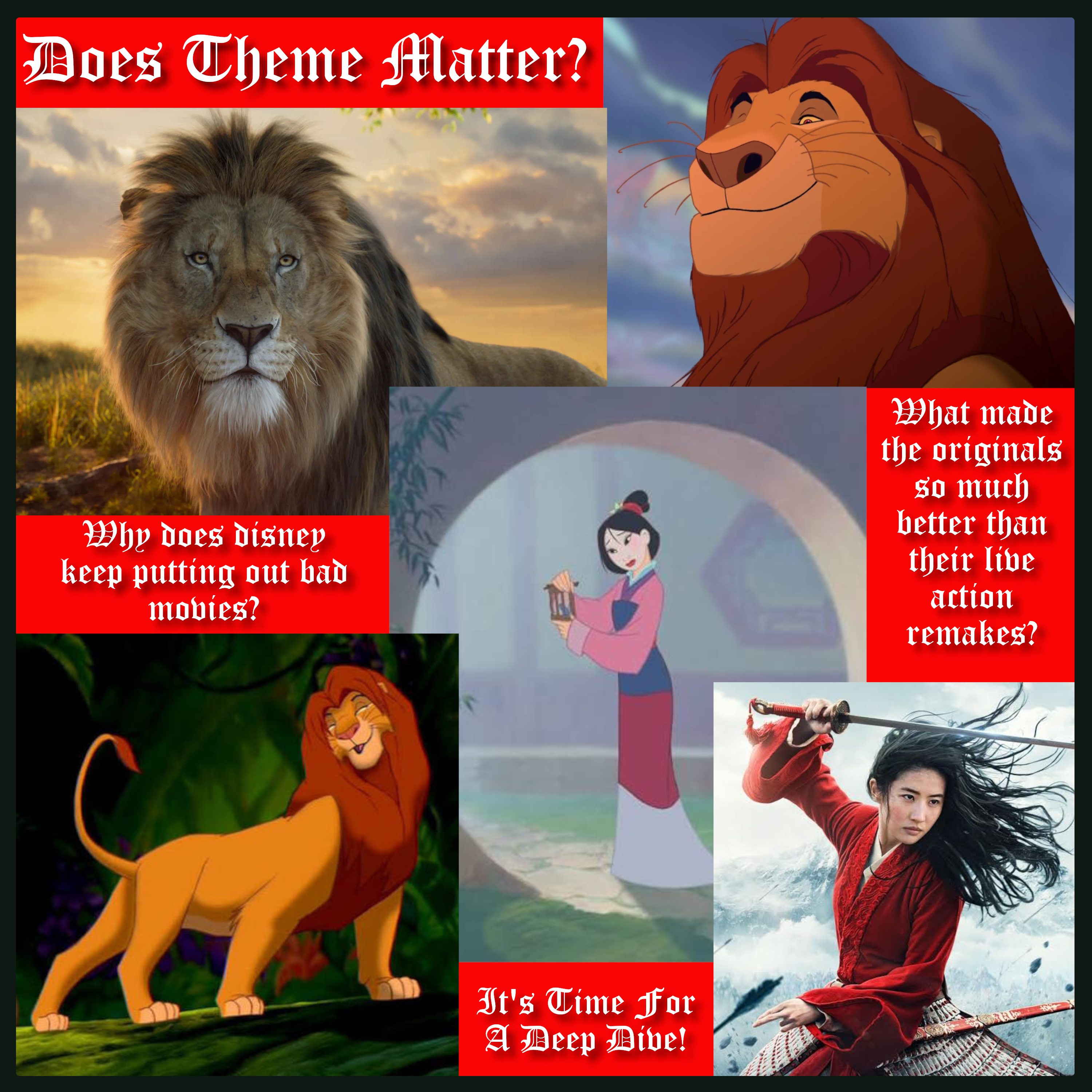
Thematic Noise: Why Live Action Disney Adaptations Keep Failing
So, I was scrolling through Reddit the other day, and I came across a post asking which film remakes were crimes against their source material. The Wicker Man with Nicholas Cage came up a bunch...so did the most recent batch of Star Wars movies (sorry if this is already inducing a simmering rage in you), but the movies that kept coming up were almost invariably Disney live action adaptations of beloved classics.
Think Mulan, Lilo & Stitch, The Lion King, Aladdin....
I haven't liked these adaptations myself. I tend to argue the Glen Close live action adaptation of 101 Dalmatians was the best one, but therein lies the problem, right? Glen Close carried that movie as a campy, over-the-top Cruella Deville. The movie relied largely on practical VFX, which often look more organic and grounded than CGI. Even the use of real dogs was a great move, and one that was both stemming from and proceeded by other classic franchises working with the same model.
This was an era in which story was prioritized over spectacle. It was an era in which good writing kept people coming back for more, and the blockbuster effect wasn't so widespread that Hollywood studios got skittish about deviating from a predictable, often soulless script. What we ended up with in 101 Dalmatians was something that embodied the Disney cinematic experience, and didn't feel a need to apologize for itself.
And I'm not the first person to share this view. Lindsay Ellis did a fantastic video about Disney Live Action adaptations which focused primarily on the Dumbo remake, virtue signaling, and how these adaptations keep attempting to retcon the controversial features of the originals in performative ways. She is correct about all of those sentiments, and I would encourage you to watch the video.
But what I'm here to talk about is the lack of understanding Disney seems to have for the medium of storytelling through cinematography; in particular, the background elements you find yourself missing, even as you may not really understand why.
What does cutting Mushu from the Mulan adaptation take away from the finished product? How about the songs? How was color used to convey thematic elements in The Lion King?
We're going to focus on these two movies because you don't have all day, and I'm not trying to write a book here (I know, little ironic...), but these and other questions demand answers.
You see, thematic elements in books are, by necessity, buried in the prose, but you don't have that element in visual media, and thus it's necessary to couch those elements in other details, often the imagery you see on the screen, or elements that are otherwise not expressed directly in dialogue and character actions.
So...About Mushu.
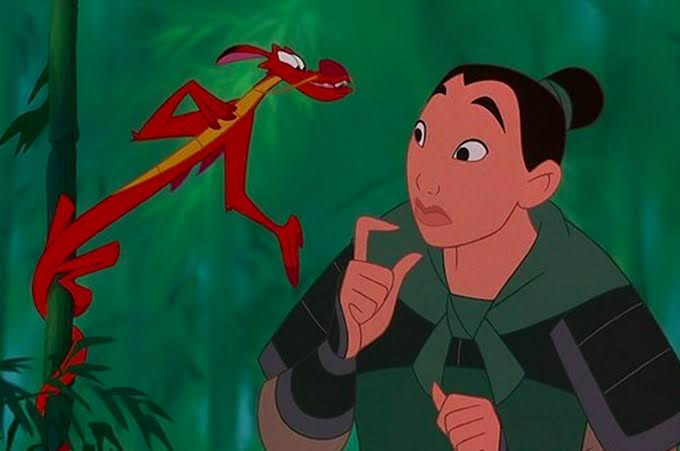
Mushu serves as a mentor figure to Mulan, as well as a confidant she can entrust with her feelings. He is the only character with a voice who she can talk to as she dons the mask of a man and a soldier, but this is just one of his roles in the narrative. He is also juxtaposed as a direct counter to Shan Yu's falcon, helping to set Mulan and Shan Yu against each other as the hero and villain of the story. This juxtaposition highlights an underlying theme that pits mutualism, vulnerability and cooperation against authoritarianism and control. The falcon is a tool whose primary role is surveillance. Mushu, on the other hand, is a confidant and ally.
In these relationships we see reflected the values of the hero and villain, expressed in a way that both highlights their worldviews and blends seamlessly with the background, such that you may not even notice what they're ultimately doing.
What is taken away from the movie by eliminating Mushu as a comedic relief character, a confidant, and mentor, is a necessary component of Mulan's growth arc that highlights who she is as a person, in a narrative that gives her no one else who can see who she is inside.
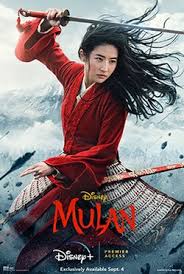
The songs, too, highlight her emotional states, the expectations of her culture for her, what manhood ultimately means, and the skepticism entreated to her as one who doesn't fit easily into this box, and ultimately, what it means to be a woman in "Chinese" society during this era. While the movie is explaining these concepts through a western lens, it ultimately succeeds at explaining the story of Mulan not just through the actions and dialogue involving her, but through songs that give us a sense of her interiority that don't come across as preachy or info-dumpy.
What is lost, when taking away these songs, while leaving just a thread of identifiable music during a critical call back to the original film, is a storytelling element that conveys emotional weight at times when the story desperately needs it. The entire tone of the movie is altered by eliminating these beats, and what is left behind amounts to a hardboiled, kung fu movie in the vein of anything Jet Li has produced. Not a bad movie necessarily, but decidedly not Mulan.
And that takes us to The Lion King...
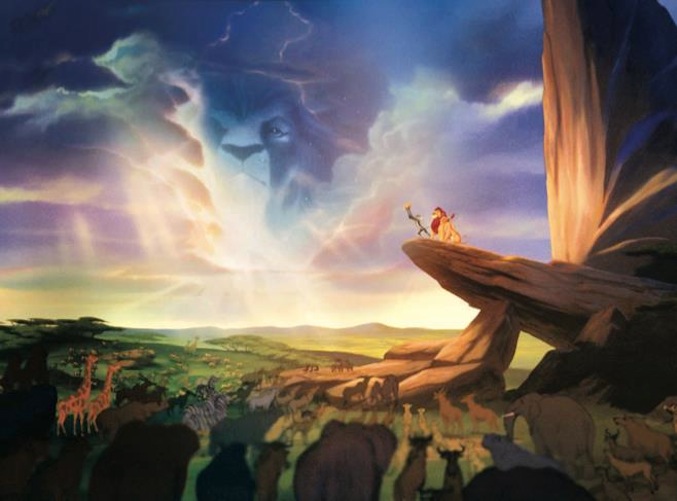
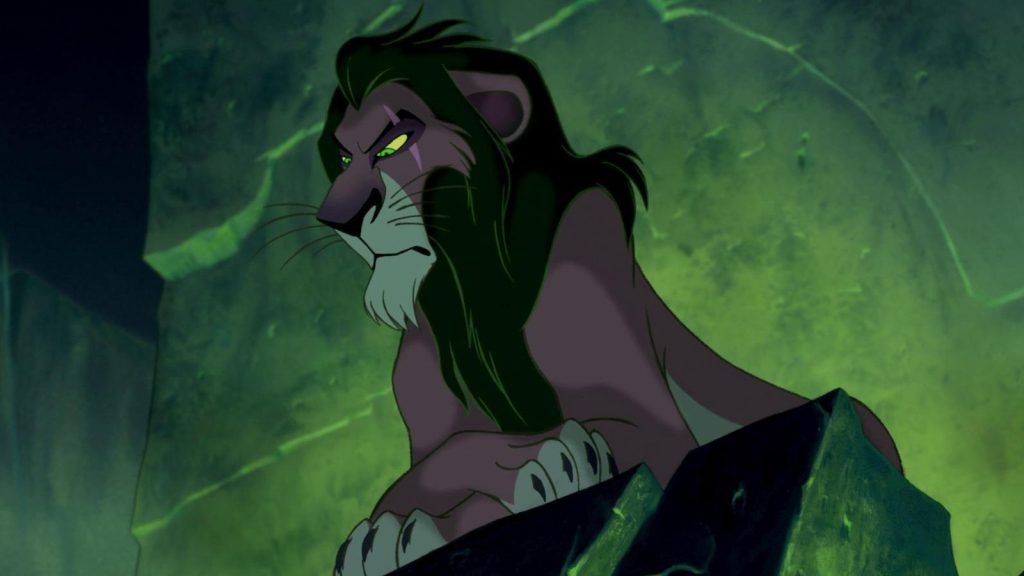
When we juxtapose the Elephant Graveyard against Pride Rock, we see a gloomy, bleak environment directly countered by a place of abundance and life. That is conveyed in the dark tones and heavy use of green, black and purple shades (envy, anger, resentment, anxiety, as color theory is concerned), with the more balanced and vibrant tones in the other environment (which convey passion, joy, tranquility and vitality). This juxtaposition creates a sense of tension without the narrative having to do anything, because to go from one environment into the other is to see the shift from comfortable, warm and inviting, into oppressive, gloomy and frightening.
When Scar takes over Pride Rock, the color scheme abruptly shifts to reflect those elements of the Elephant Graveyard which give it this character, conveying to you, the viewer, that something has gone seriously wrong, once again, without the narrative needing to do anything. But this is contrasted with the jungle where we find Simba in the company of Timon and Pumba, where the Circle of Life is re-contextualized, Timon and Pumba are upheld as benevolent mentors to a young Simba, and the jungle itself is presented as an isolated, utopian oasis, well removed from Scar's influence until the very moment Nala appears in this area, finding the messianic Simba, who must then decide whether to preserve his own peace, or assume the role he was destined for. Ultimately, fire and rain become the medium's symbols for the cleansing of Pride Rock, and when Scar is finally deposed, the color scheme again shifts, providing catharsis, symbolizing that healing has occurred, and bringing this circle of life back around to a place of harmony and balance.
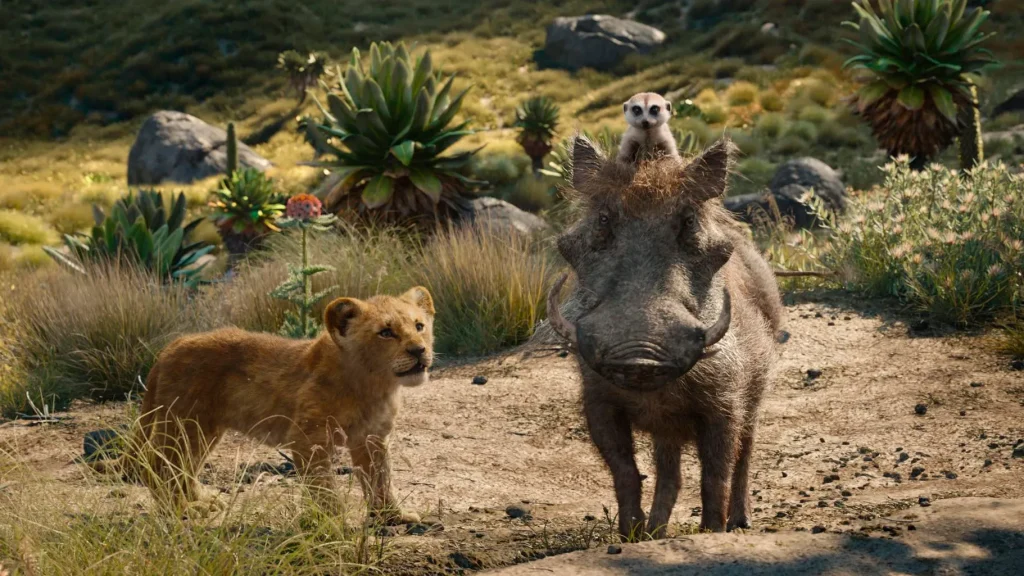
What we lose in the "live action" adaptation is directly related to its pursuit of realism. We find ourselves in a largely beige environment which may be true to how Africa looks, but which sidelines the thematic integrity of the original product without presenting a viable solution for conveying those thematic details, and the whole movie suffers.
This has become a running theme in Disney live action adaptations. The films are more concerned with apologizing for the problematic content in their source material than they are with telling a good story. The story, in turn, misses out on key contextual features because thematic components that were endemic to the originals are stripped away, leaving behind a product that feels soulless, lacks emotional depth, and ultimately retells a beloved story in a way that feels somehow asymmetrical to the viewer, even as the casual viewer cannot always explain exactly why.
And that has become a theme throughout a lot of Hollywood productions. It has also bled into the publishing industry in the form of books that succeed at providing the spectacle, but not the emotional or thematic depth we used to get from books as a fundamental characteristic of the medium.
I don't know if that has more to do with shorter attention spans, and a general backslide in literacy rates in the modern era, or if it's related to an overreliance on focus groups, or what. What I do know is that many properties that are made or distributed by these industry giants have lost the thread of what keeps people coming back to those classic works, and that's...well, it's just a shame.