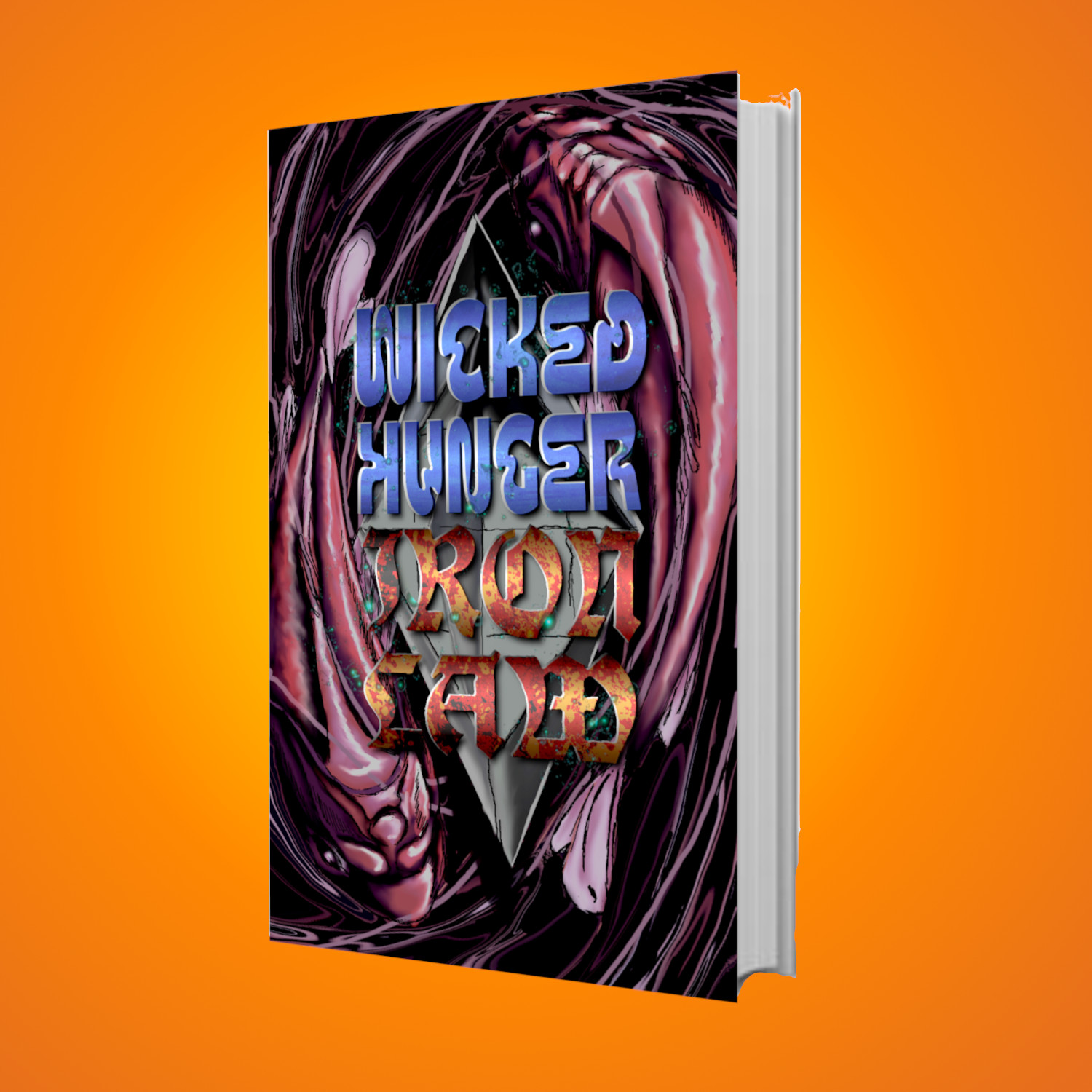
Miraculous Healing - How Sex and Magic Intertwine in Wicked Hunger Iron Law (NSFW)
Wicked Hunger Iron Law is a sexually charged narrative of exploration, identity and a crisis of faith that takes three young men into its twist. Though the narrative only begins to extrapolate on the expressions of magic in this secondary world, it highlights the core features that allow it to function and the consequences of its use.
Iron Fundamentalism, the in-world religion our protagonists have grown up with, teaches that homosexuality is a spiritual sickness, and this sits at the center of a complicated dynamic that uses queer bodies as fuel for miracles, while persecuting the very same men for daring to choose love. This central tension is the driving force in a narrative about the price of reaching for freedom in an institution that condemns everything you are.
Miraculous Healings as Social Proof
Iron Fundamentalism uses public healings as a social proof of its own merits. Those healings are expressions of magic which bend its influence to mending bodily and psychological ills, giving the people who receive a Druid's blessing a second chance at life. A powerful recruitment tool, these healings have allowed the clergy to amass a significant following in impoverished districts of Orfeis, but the clergy is hiding a secret that could throw their entire organization into chaos.

Sex is the source of magic. Energy, life energy, housed in metal substrates provides the fuel for the Iron Fundamentalist miracle. And the only means of producing this energy, of storing it, is through queer intimacy. Men's bodies become the power source for the miracles that draw crowds of desperate people into this cult's orbit, and yet the body within the clerical order who generate this power, called Pathfinders, are not treated with respect but with derision. Most believe they have been saved, and assume they have taken vows of celibacy, abandoning their former lives as queers in favor of a moral life as men whose role in their communities is in policing other queer men, apprehending them, and bringing them in to become Pathfinders themselves.
Through sex, energy is generated, and through intent, it is dispersed for various exercises in healing, protection, and heightened sexual pleasure, among other applications.
But why structure the magic system in this way?
Setting aside the ability to write steamy MM sex scenes, and focus the lens on queer intimacy and relationships, the inspiration for this mechanic of the world resided in explorations of the hypocrisy of faith. That we should ingest the proselytizer's message of love and acceptance, while seeing they are often the most judgmental and persecutory body in our orbits, became the basis for creating a magic system and a religious institution that had the power to explore these central, anathematic concepts. In order to internalize the messages of faith, often we have to suspend our disbelief and ignore what our eyes see. I decided to take that concept to the extremes, by creating a complex faith system that centered around three gods, and then using their stories as a central allegory for hypocrisy within the faith.
In Juba the Wicked, Kashmet (Lady of Fire), and Kish (The Iron Lord), we see a story of love, envy and creation that explicitly states Kish and Juba had a romantic relationship with each other, but identifies their mutual feelings of love and desire as wrong-minded and a source of weakness. The faith community upholds Kish's eventual endeavors to build a relationship with Kashmet centered on the act of genesis as a virtuous development in his life, and Juba's ability to create life independently as a matter of cruelty.
This does three things concurrently:
- Establishes a heterosexual relationship and child rearing as beneficial and morally sound traits of a healthy individual and/or couple.
- Imagines homosexual love as primal, immoral, and a source of weakness.
- Compels adherents to the religion to ignore valid interpretations of the plain text which would turn this narrative around, assuming Kashmet to be a jealous guard over Kish, and his relationship to her a matter of duty, while his relationship to Juba is a matter of reciprocity, mutual respect, and love.
To make this framework viable, a certain measure of cognitive dissonance must be maintained, or the entire orthodox tradition falls apart. So, inconvenient passages are glossed over or reinterpreted, and the faithful follow the line the clergy set before them in order to avoid engaging with conflicting messages the plain text of their holy book provide. Effectively, love between two men is not wrong. Kish's bisexuality is a source of strength and not weakness. Genesis is not the lone goal of romantic relationships. And, power comes from genuine intimacy, not forced companionship.

In essence, the text itself highlights the idea that men who love men are spiritually awakened in a way that allows them to become healers and guides in their communities. This narrative doesn't undermine the contributions of women or cast a negative light on romantic entanglements between women and men, or even women and women, but highlights that queer intimacy in particular is a powerful and often healing thing, and ought to be treated with respect. Contrasted with that, what the clergy has to say about it, how they interpret these passages to mean other than what is plain in the text itself. These incongruities serve as a means of control, with the ultimate goal of isolating access to this power to the clergy themselves, preventing ordinary people from becoming entangled with a power they may not be able to control.
Back to the magic, a person who engages in same sex intimacy, who chooses love and sexual gratification with a partner of the same sex over hiding who they truly are behind a mask, amasses a certain measure of power, and may store that power in a substrate in order to perform miraculous healings and other rituals later. A place, then, ought to be reserved for them in the grand scheme, but one open and honest about its themes and truths, yet it is not in this context. In turn, the Iron Fundamentalist faith leader values not open communication, honesty, and respect for the community member, but control, manipulation and isolation, all means of maintaining a status quo that reinforces the authority of a chosen few, rather than the general benefit of the people.
In plain language, magic expressed freely, and the honest communication that comes with it, are sources of great power, and a net benefit to the community. Magic, when expressed through a language of moral decay, and held in isolation to bolster the reputations of a few who know the truth, becomes a weapon of subjugation, alienation and control which allow a cult to function and appear valid in the eyes of ignorant others. The religious tradition is, then, a destructive influence over an otherwise neutral mechanic of the world these characters inhabit. The text, on the other hand, when read without the flavor of specific interpretation, becomes a vehicle through which nuanced identities can be validated.
From the Heart, an Interrogation of Faith and Its Relationship to Sexuality
In Wicked Hunger Iron Law, sex is the basis for a quiet conflict between men of faith and men who would dare to love men openly. It puts on display two very different varieties of queer men (those who have the courage to accept who they are, and those who are simply not wiling to pay the price for freedom), and interrogates the nature of homophobia in the context of a religious institution, while highlighting the hypocrisy inherent in the same.
For queer men, I think you'll find the balance between raw, authentic representation, tender intimacy, magical power and the choice to live your truth to be as compelling as it is endearing. For everyone else, perhaps you'll find in this book a window into the nuanced lives of queer men, and a certain measure of comprehension for why so many of us choose our joy in living openly and honestly over the strictures of faiths that insist we're wrong for doing so.