The Core Memories That Shape Us - Exploring Malthus's Traumatic Past
Excerpt From 'What The Watcher Sees'
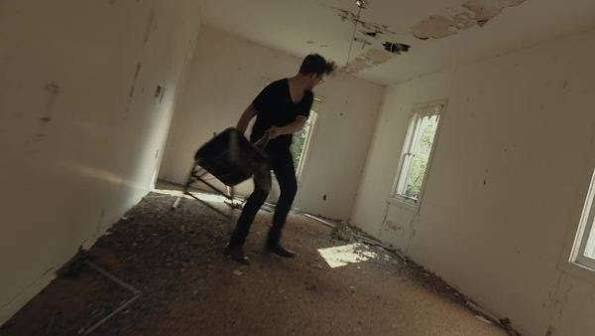
In a child’s eyes—having seen in all of his recent memories a depressed ruin, a man for whom grief was a persistent state, unrelieved except for brief moments when the drunk took him to the angry place, and chairs were tossed, windows broken, holes punched into plaster walls as he raved about the Immortals, and the Sky Lord, and how unfair it all was, and then wept openly, blubbered and wailed so loud the neighbors thought wise to check on his poor son; take him away from that house and all of its complexities, and put him to bed with a cup of honeyed, lemon balm tea and a clean quilt, on their own couch—the sight of him sitting there, just sitting, was a welcome relief.
Here, a man smiling, a grin he had not seen since his mother was still alive alighting on those thin, cracked lips.
Could it be? Was this real? Had his father finally let his mother go?
“Come here, son.” He said. “Eat your breakfast.”
“Okay.” said Malthus uncertainly. He stepped deeper into the room, pulled out the chair his father had designated, and climbed into it. A stack of crepes with similar accompaniment rested on a clean plate in front of him. He marveled at the smell, his eyes wide with wonder, as he looked from the food to his father, back again.
“You made this?”
“I thought I’d let you sleep in.” his father said. “Yes. I made them.”
Malthus picked up a fork, cut into the stack.
“I took a walk last night. I needed some fresh air. A little exercise never hurt anyone either. I found myself on that walk. I…” his father’s gaze fell to his plate. He set aside his fork and knife. “I’m sorry. It wasn’t fair to put you through all of this. The last few years, you’ve been taking on more than any boy your age should be asked to. I’m sorry I wasn’t the father you needed.”
A cold ball settling into the pit of his stomach, Malthus set down his cutlery and pushed his plate aside. The smells had begun to make him feel nauseous.
Watching him, his father firmed his lips. He looked disappointed, but maybe that was guilt. Was this going how he expected?
“I think we ought to get out of this house today. I threw out the rest of the whiskey last night. We’ll need to go to market. There wasn’t much in the way of fruits or vegetables in the pantry.” He said.
Malthus watched him now, watched him avidly for signs of unraveling. He tried on a smile. He wasn’t sure how to feel about his father turning this corner.
Relieved?
Happy?
He felt numb.
(What The Watcher Sees, A Father's Love, p. 4)
The Memories That Shape Us
What you're looking at, in this excerpt from What The Watcher Sees, which you can get as a thank you for signing up for my newsletter, is a brief excerpt from the moment Malthus allowed himself to feel hope again. It was a flighty thing, certainly not thoroughly explored. He was perhaps nine or ten years old, and he had been propelled into a self-sufficient role while his father descended into alcoholism and depression, following the loss of his mother to a disease. The story goes on from here to extrapolate on what led them to this place, and how fragile this moment actually is. There is the threat looming in the background of a regression into the same old tendencies, a spiral back into immense grief for his father, but he finds himself hoping it's real this time, that the two of them can move on, and his father can be a father to him once more.

For three years, Malthus has had to learn how to take care of himself. He has received help from well meaning neighbors, but he has also been stuck in this house, holding down the fort with a volatile man he feels a need to tiptoe around in order to keep the peace. Sometimes, his father flies into violent rages, lamenting to the gods and the immortals that it isn't fair, that his wife was taken too soon, and so there is this motive in Malthus to make himself small, invisible to his father's eye, even as he hopes he one day recovers.
This moment, then, is the pivot into what appears to be a return to normalcy on its face, but which hides a dark secret. To his eyes, his father is happy, or trying to be. To the careful observer, they might notice signs the father is manic, that he has found an actionable solution to the problems afflicting him, but has not done the work to heal from the trauma of losing his life partner before her time, and being unable to stop the disease from taking her despite himself being a doctor.
That, then, leads us here:
There had been a moment not long ago when Malthus believed his father had turned onto a better path. The dark clouds had lifted. The man no longer spoke of his mother as a woman gone, an infirm stolen away by sickness too early. He spoke of her almost as if he knew her properly, as if she was still there with him.
There had been hope, such a beautiful thing, something so soft, so approachable and pure, in that spare handful of days.
After years, his father was over his grief! The worst of it was gone!
So it had seemed.
But truth had not visited their home.
A room he was not allowed in. Had it not been the very one in which they slept? A lingering stench had emanated so harshly from it—not desiccation, not rot, but peat. Earth. Something oily…sickly sweet.
What had he been doing in there?
For so many days he had not known; had not cared. His father had returned to him. Six years of grief gone overnight, and him happy again. How many times had he seen his father smile after his mother passed? How many times had he believed those smiles genuine?
(Broken Bonds, Echoes From The Past, p. 372)
In this excerpt from Broken Bonds (which you can dive into right now at no cost with a Kindle Unlimited subscription), we see a callback to the things Malthus chose to ignore in favor of the more palatable narrative that his father had returned to his senses. The cold reality was that his father had spiraled so far he had deluded himself into thinking he could revive his wife through necromancy, and the price he would have to pay to make it happen was steep.
Malthus sits at the center of a complicated scheme in which his father would bring back his mother, reunite the family in a twisted sense, and bring about a return to a broken version of what they had been, before disease took the woman away from him. At best, he might have animated her corpse, but her soul had long since moved on. There was never any getting that back. He would have had a doll granted a variety of life that would allow it to move, but there would have been no reversing the rot that already persisted, and he was missing a critical ingredient to make this rite work anyway, one which would require murder to obtain.
At a formative age, when boys are just beginning to think critically about the nature of their life, identity and world, Malthus received messages that people he cared deeply about could do terrible things, that those he loved would leave him or be stolen away from him, and that he must take care to protect himself and sustain himself if he was to survive. These features would create entrenched cognitive patterns that prioritized maintaining a high level of control over his emotions, a drive that would later inform an aggressive drug addiction, a deep fear of losing that control and harming others, and an intense fear of abandonment that would cause him to push others away or maintain emotional distance from romantic partners, on the belief that if he allows himself to care, and they leave, he will lose control again.
That negative image of his father would also lead him to become susceptible to another kind of problem.
Hugo Silvanes, The Substitute Father
I'll cover Hugo Silvanes' psychological profile in another post, but for now, understand he represents a Machiavellian psychopath. He is incredibly gifted when it comes to finding the levers to pull in order to make others do what he wants them to, and he is highly intelligent besides. Writing him was an endeavor in wading into the worst kinds of human cruelty, and many of the most difficult moments to write for me were centered around his relationship with Malthus.
Malthus already had a negative image of his father, which was complicated by an innate desire to see the man as good in some way. His father did attempt to perform necromancy, but his intent was to bring back his wife. His father did attempt to rope him into this despicable act, but his sudden shift toward violent desires was coming from a place of love. He was exposed to a man plagued by irrational thoughts who chose to act on those thoughts, and at a young age that increased his threshold for tolerating pain, and compelled him to compartmentalize in order to keep himself from breaking down completely. In his mind, his father is a good person who did a bad thing, but there is a fracture there which presents two competing images. Yes, there is the good person who did a bad thing. Yes, also, there is a person who spiraled out of control and attempted to do harm to him.
Hugo positions himself as a surrogate father figure to Malthus, supplying him with a powerful dissociative drug that allows him to maintain a high level of control by numbing himself to the pain associated with past traumas, those surrounding his father being the root, but being later complicated by memories of the moments when he did lose control and harm others. By positioning himself as a surrogate father, he opens the door to manipulating Malthus into participating in situations that require immense cruelty. Malthus is a doctor, like his father before him, and a gifted one. His talents are twisted into something sinister by Hugo, however, when he is forced into a role that amounts to keeping his victims alive while he tortures them for information and to make a point.
You see this dynamic play out in a scene in Broken Bonds in which Hugo deftly activates Malthus's acute traumas in order to force him into a downward spiral, compelling him to confront his own actions even as he attempts to detach from the situation at hand, dissociate from it, and yet do what he believes is his moral duty in order to keep the victim of the hour alive. The reason this hits so hard is because Malthus knows his victim this time. He has a close relationship with him. This isn't some faceless strongman or smuggler who happened to piss Hugo off. It's a friend.
“We can make this a lot easier.” Bartamus said. “I can use my gift—“
Hugo held up his hand to stop him. “Not yet.”
When the fight is over. Malthus thought, a cold knot spinning ever broader in his chest. When he doesn’t have the will left to resist.
It would be so much simpler, so much more humane, to allow Bartamus to look into Jeffie’s mind. No knives then. Just the truth. Only the truth.
But the purpose of the docks, this warehouse, this room, was not to collect information. Hugo already knew everything he needed to or Jeffie would not now be here. The purpose of the docks was to satisfy Hugo’s need for retribution, to send a message to his underlings that no one was safe from his wrath, that they should never seek to cross him, for in doing so they might become his next victims.
Don fluttered into his mind, and he scrambled to liberate his pipe from his pants. His hands missed his pocket thrice before he managed to wedge his fingers into it.
How am I going to tell him? Sky Lord’s mercy, how could he forgive me for being involved in this?
Bartamus stayed his hand. They met each other’s gazes, and the Watcher shook his head.
He released his hold on the pipe, withdrew his hand from his pocket.
“You two can wait outside for the time being. I’ll call you in when you’re needed.”
Bartamus’s grip firmed on his arm, and he led them out of the room, coming close to dragging Malthus behind him.
He closed the door on what would soon be a horrifying show of force.
From behind the corrugated door, Malthus heard Hugo’s voice, crooning to Jeffie like another man might to his favorite lover.
(Broken Bonds, The Docks, p. 150)
Malthus exhibits much of the same behavior as his father before him: descending into despair, self-medicating with his drug of choice, numbing himself to his emotions through that self-medication, spiraling out of control whenever his access to said drug is limited, and eventually losing control and acting out violently. The hard limit is the drug abuse. To attempt to handle life's perils raw inevitably leads him to the dark place, in which the bad memories from his past bubble to the surface and pull him out of himself, and the anger, and fear, and pain take over, pushing him into a place of extreme violence.
A central thematic irony is that he possesses both the ability to heal and unheal grievous wounds. Unhealing involves cursing formerly healed wounds back open, effectively reversing time on them in order to freshen them again, which can put the lives of others in jeopardy. In those moments when he loses control, that is precisely the danger presented to those in his vicinity, and for that reason, even as he uses him in service of his own ends, Hugo (who is himself a psychopath and not particularly emotional) fears him.
As for the above scene, some context is in order. Jeffie and Don are brothers. Don is Malthus's lover. Don and Jeffie are also fosters a close friend of Malthus's took in when they were just kids. These connections mean to him that he is participating in the torture of a cherished loved one, and though mercy after such an experience would be, in his mind, to let him die, he can nonetheless give him no such out. And he can't because he comprehends that to let Jeffie die would alienate himself from the friend who has been there for him through his worst moments, who has been a confidant to him for almost two decades, and create a rift between he and his lover, who he would like to keep at a safe distance from him, but whom he does, in fact, love.
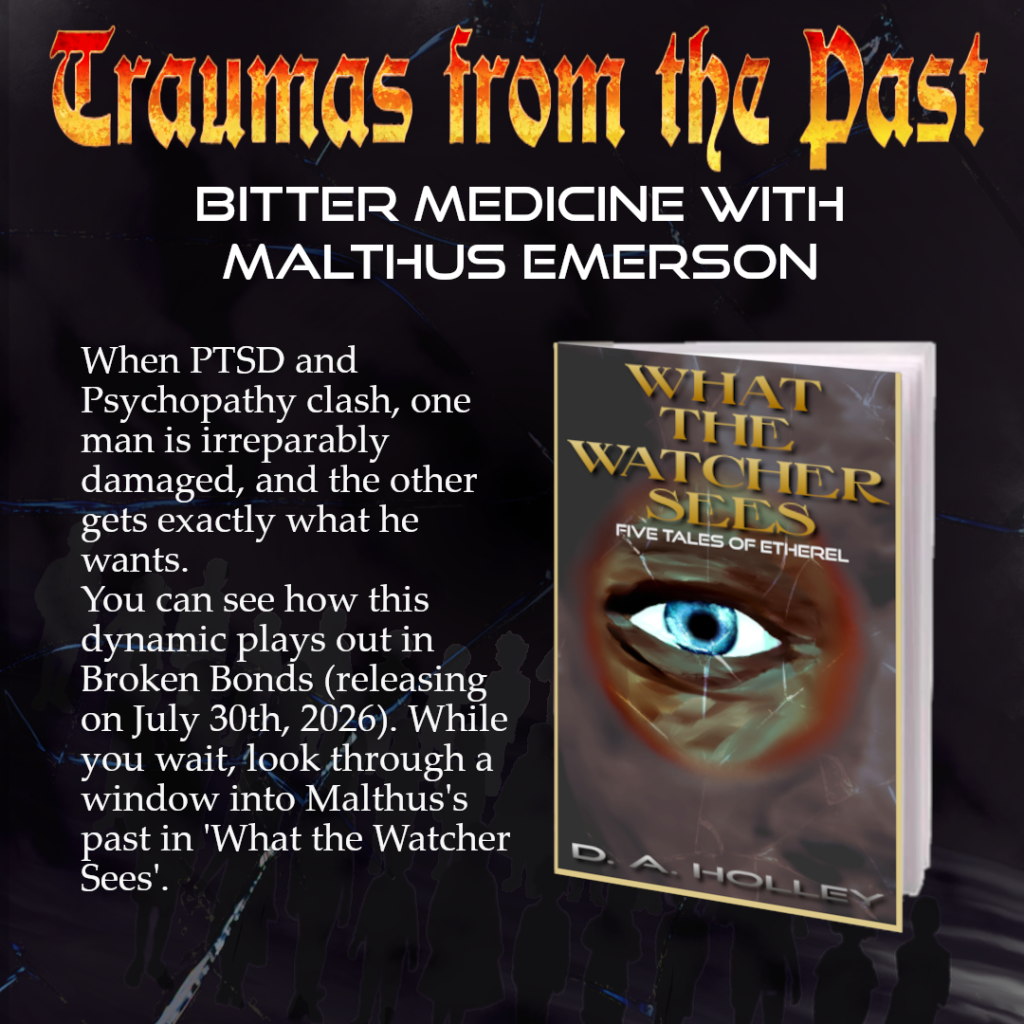
This cocktail of complications speaks directly to entrenched, hyperbolized beliefs stemming from past events surrounding causing harm to others, watching his father struggle and ultimately fail to keep a loved one alive, and becoming catatonic in the face of a father intent on doing harm to him in a state of psychological unraveling. In this moment, entrenched schemas are being activated in rapid succession, and the best tool he has at his disposal is imbibing, using drugs to help him dissociate, performing the work he needs to do in order to keep Jeffie's heart beating, to keep him from dying, all while listening to the commentary from a charismatic psychopath who is actively working to destabilize him in multiple, insidious ways.
Malthus is a case study in C-PTSD and Substance Abuse Disorder. He is far more than the sum of his parts, but when you meet him, you meet a man who is close to breaking, who is careening toward the low point in his journey, and who has a mountain to climb if he is to heal. After reading Broken Bonds (which you can read for free with a Kindle Unlimited subscription) and What The Watcher Sees, you may come to understand who he is in such great detail you find yourself rooting for his recovery, and that's kind of the point here. His greatest strength is his greatest vice, and that is an immense capacity for empathy.