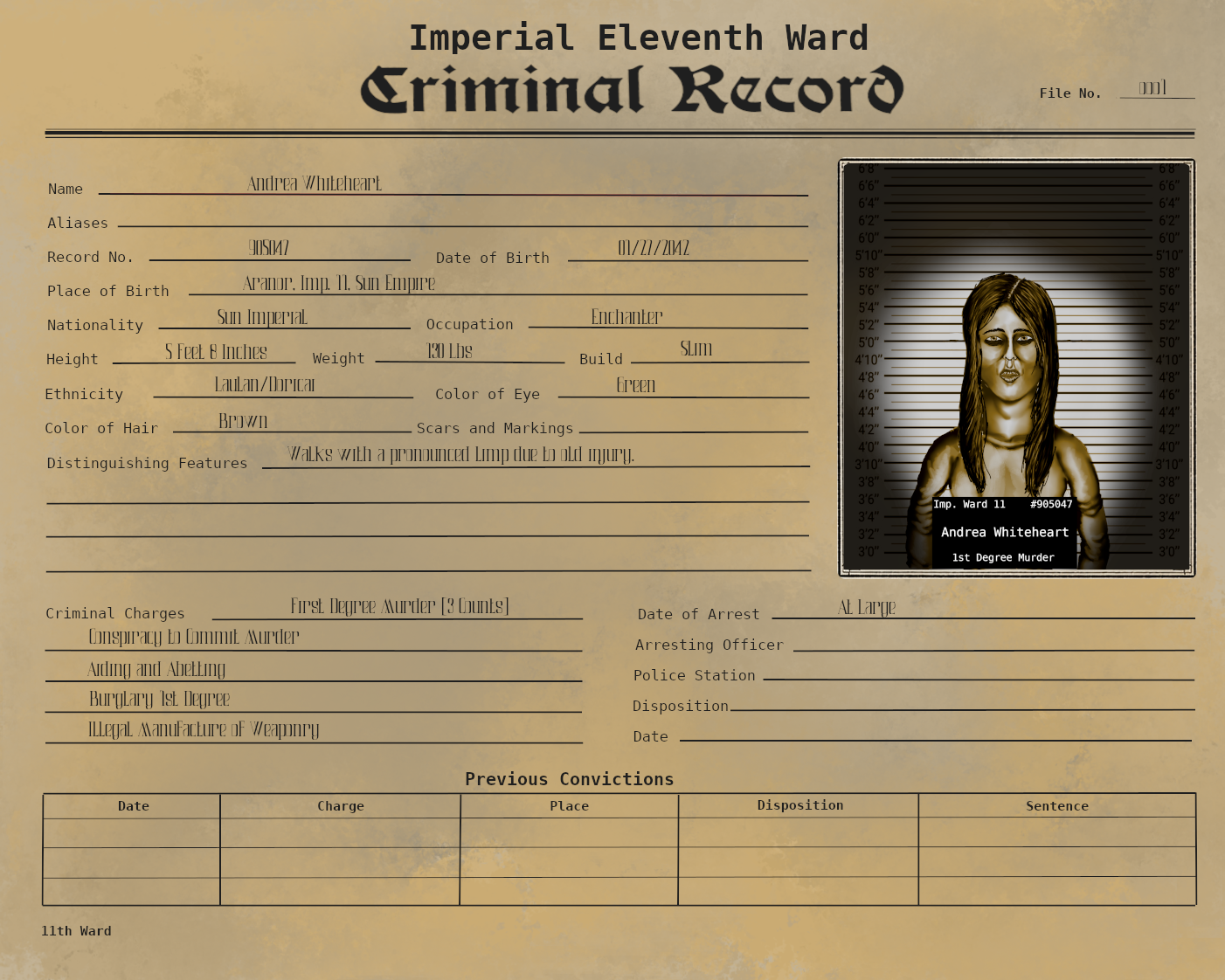
The Black Rain Archives: Andrea and Hugo - A Familial Bond Weaponized
Our identities are shaped first by the people closest to us. Those people can become the standard against which we judge ourselves. In her uncle (the only surviving member of her family who will have anything to do with her), Andrea finds both a shaping hand and a reflection of possibility that she feels compelled to flee from. Hugo's hyper-rational worldview may have shaped her to become a prolific assassin at an early age, but in rejecting his worldview (and her former profession), a new potential arises that she might explore--that her value does not need to be defined by efficiency, violence and practicality; that love and community can be the pillars she chooses, as she learns to define who she is on her own terms.
A Master Manipulator
From Hugo's perspective, emotionality has no value. Bonds are levers to pull in service of an agenda that deprioritizes connection in favor of utility. Though he is capable of feeling things quite strongly, Hugo has never prioritized his own feelings in his decision making process, and he made every effort to create a reflection of himself in his young niece, when he became her legal guardian.
In Hugo, we see a particularly dangerous kind of villain in that his greatest power isn't in raw strength or intellect, but in his ability to warp the reality those around him perceive. Silver tongued and with little concern for morality, he is driven by the singular, uncomplicated desire to finish what he starts, complete his missions, succeed in his designs. That view allows him to twist the truth or weaponize it, make those around him dance on his strings, and manipulate them in ways most people would find too disturbing to entertain.
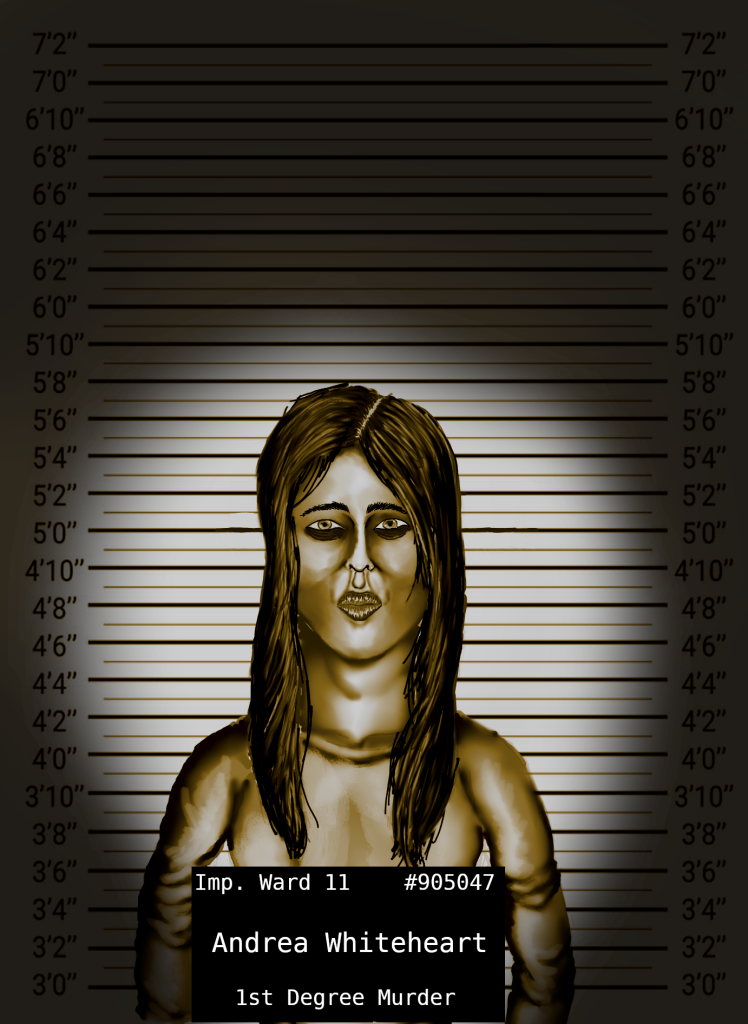
In him, Andrea is met with a true Machiavellian psychopath who views his adoption of her as a favor to a friend, but who sees no utility in saving her when her life comes crashing down. She must develop a purpose that aligns with his needs if she is to earn her place in his orbit, but to give her a purpose ultimately means training her to become a killing machine, someone able to set her feelings aside when duty demands, in order to ensure a near perfect success rate in the missions he assigns her.
Even when he finally allows Andrea to hang up her weapons, he demands she serve a purpose. What value does she have to him otherwise?
He made a vow to his late sister to protect her children, yes, but protection does not mean the same thing to him as it does to others. In teaching Andrea to be analytical, cold and logical in her decision making, to set aside values of companionship and compassion in favor of success, he creates a mirror image of himself, because he views this as the best means of keeping his promise. But his way is anathema to a woman who still has the capacity to feel, and it is for precisely this reason she shuns him, and everything he represents, as she climbs into adulthood.
A Survivor's Perspective
By the time we meet Andrea, she has already retired from her role as one of Hugo's most prolific assassins and has taken up a quiet life as a small business owner and enchanter. Her name and reputation are associated with her work making items with specific uses that might improve the lives of her patrons in various ways. She may make amulets with various abilities, relics that might help defend a home, and vaults that only open for the person whose soul they are bonded to, but her passion resides in creating self-sufficient ice boxes, and ranges, home appliances that might make life better for regular people.
In her rejection of Hugo's worldview she seeks to shape her own around utility repurposed, practicality reassigned. She becomes a provider for her community, like she envisions her mother and father were before her, and seeks to train a new generation in her arts.
But Hugo's shadow still looms heavy over her as she settles into a new role, and carves out a life for herself. She has made the decision never to have kids for fear her old enemies might use them against her, or that her uncle himself might see in them new tools for his use. Her home is a resolute fortress hidden behind the cozy facade of a cottage in a blue collar neighborhood, with every addition to its security created with the specific intent of keeping him out. Her worldview is still being shaped by him even as she seeks to reject everything he stands for, because he has taught her to be paranoid, distrusting of others, and to keep her feelings to herself.
Despite having chosen a husband to spend her life with, Andrea still feels like she is alone in the world. She has gathered a group of close friends she would die for, and each of them represents a different quality within her. Nonetheless, she chooses to bear her burdens alone, to deal with her grief by herself, because she does not want to burden someone else with all that haunts her.
The Lies That Shaped Her
But this is another way in which Hugo has molded her. She believes she is alone because he has given her a reason to, and though it may look like he uses this as a means to keep her dependent on him, it is anything but. In the warped way he sees things, we find a man who has done what he believed necessary to protect a girl he never wanted, and to mitigate the risk she might do something irrational, something that might get her killed and thus cause him to fail in his promised role as protector to his sister's child.
Hugo has shaped her to internalize a lie for her protection. He has chosen to lie to her for seventeen years.
In the inciting incident in Broken Bonds, you see Andrea's understanding not just of her life but of herself shattered in a single moment, when Hugo finally tells her the truth. That her family is not as dead and gone as she believed, and that he has known where her brothers are throughout all of that time, but has elected not to tell her because there was no use in telling her. Because to tell her might jeopardize his role as her protector.
Can You Kill An Ideology?
A good villain changes people. A great villain reshapes the identities of those who stand against him.
Hugo represents the latter kind. He stands as the gravitational center of the plot in Broken Bonds, forcing everyone around him to react to his actions whether they like it or not. His acts lead one city to be razed to the ground, and another's criminal underground to seek his head before he can do something on the same scale at home. His strongest allies are pushed to their breaking points as he wrings out every ounce of use they might have, all in service of his ultimate goals.
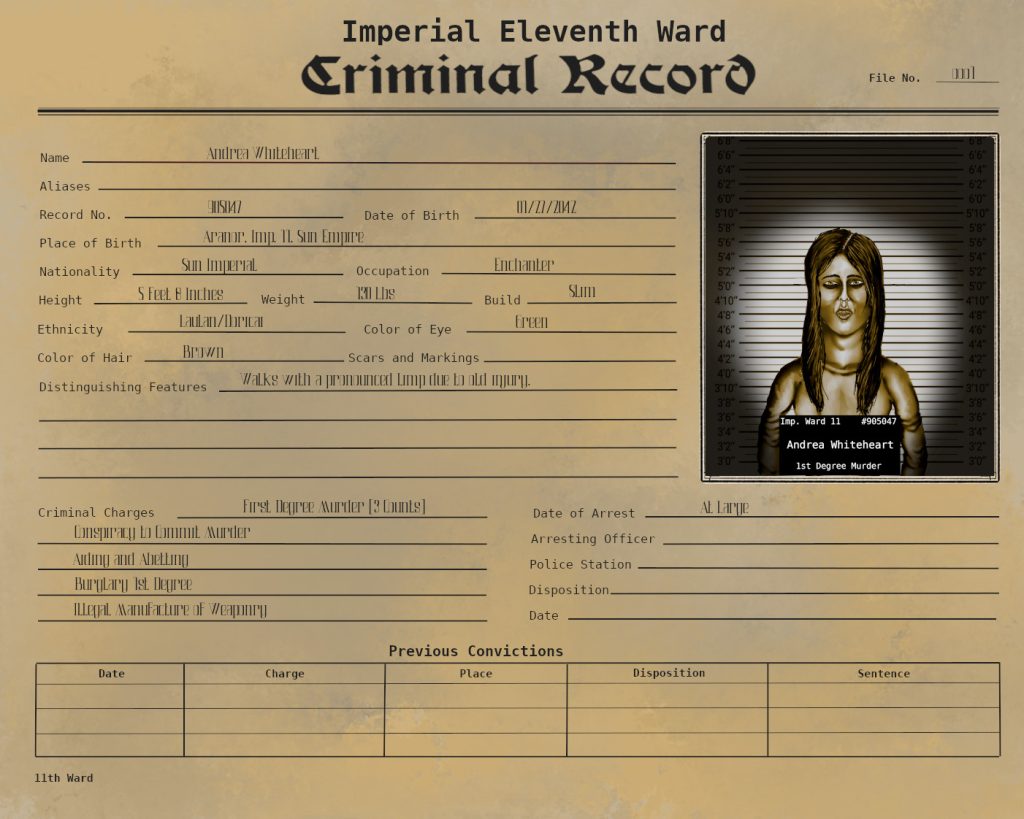
Andrea is no exception to this rule. Goading her into making an attempt on his life ultimately serves his interests. Whether she is successful or not isn't the question we need to ask ourselves here. The operative question is "what does success in killing him have the potential to change in her?" She has spent her adult life rejecting everything he is, but that has also required rejecting those qualities she has taken from him. In attempting to take his head, she might save a city from its doom, but in doing so, she may also become what he has always wanted her to be. Hyper-rational, unemotive, manipulative, and deadly. Whether he lives or dies in the end, what he leaves behind might very well be someone who is just like him.
This struggle might be on a scale you haven't experienced in your own life (I hope you haven't), but the question I ultimately framed Andrea's relationship with Hugo around is something deeply human that I think most people can relate to. The central question is "who gets to define us?"
How much of who we are is taken from the influences we had around us when we were young? We all take behaviors we subconsciously internalized at young ages with us throughout our lives, and those tend to shape our emotional landscapes and how we perceive the world. In Andrea, we see a woman resisting the temptation to become who her uncle has taught her to be, even as she recognizes some of those qualities protect her from harm. And that leads me to ask: how do you lay claim to the person you want to be instead of reacting to your past? What parts of us are genuinely ours? And how do we escape becoming like those who shaped us?