
Gods of Rust and Fire: How Faith Shapes One's Perception of Reality
As I've looked into the histories of various parts of the world, I've come to notice a running theme. At its core: the fluidity of sexuality and gender expression has an inverse relationship to the degree to which Abrahamic religious systems are entrenched in a culture. That is to say, when Abrahamic religions arrive in various regions, they bring with them a sweeping push to eradicate and assimilate the homosexual, often treating queeerness and trans identity as deviant and wrong, and introduce that mindset into cultures that have otherwise had rich traditions of embracing these identities.
Redefining Reality
Prior to the arrival of Abrahamic religion to any given region, gender identity and/or sexuality isn't defined by what we now view as hetero-normative gender roles. There is a greater degree of nuance present in indigenous cultures in particular; but even where organized religion proliferates to a similar degree as we see with Christianity and Islam, homophobia and transphobia are far less prevalent. When Abrahamic religions arrive, condemnation of homosexuality and gender fluidity (which we see in various forms throughout these regions and throughout history) increase by several orders of magnitude. Local traditions surrounding same sex relationships and differing expressions of gender are cracked down on, and all of this seems to be a means of creating in-groups and out-groups, or emphasizing the importance of them, for the purpose of keeping an oppressed, local populous under control.
Religion, in these cases, becomes a tool in the authoritarian toolbox. We see that in the spread of Apartheid rule throughout Africa, and South and Central Asia. We see it again in the Americas under colonial rule.
Abrahamic religions arrive. Some of the most stubborn local traditions are assumed into them under the guise of, say, visitations from Mother Mary, or associations with saints, or novelties attached to major holidays. The rest is done away with, as the civilizing force of religiosity is utilized against those local populations to convince them of their own savagery.
"When Abrahamic religions arrive, condemnation of homosexuality and gender fluidity...increase by several orders of magnitude."
Wicked Hunger Iron Law, which is available to read for free if you have Kindle Unlimited, explores this tension between faith and sexuality, or deviations from the accepted sexuality, and it does so in a few ways. It does so, perhaps, most directly in the form of the holy text (The Book of the Earth), its treatment of the subject of the Water God, Juba, and the erasure of context in temple services surrounding his relationship with Kish, the God of Iron. (Luke, p. 1; Airing of Grievances, p. 125)
Iron, Water and Fire: When Cleansing Isn't Healing
Let's start with a little background. There are three gods in Iron Fundamentalism who form a compliment to each other, and the way the lore surrounding them is interpreted isn't given to one accepted variation. (You can find more about the trickster god, Juba the Wicked, here.) Cults within Iron Fundammentalism tend to follow the most rigid interpretations in regard to the relationships between these gods.
- Juba was Kish's first lover.
- Juba's influence over Kish weakened him.
- Kashmet appeared around the time of the creation of the first man, and healed Kish of the weakening influence Juba held over him.
Of these three, Kashmet is the only female. The way I've structured the religion is such that those who devote themselves to it ultimately view Kashmet as Kish's savior, even as the religion centers on worship of Kish himself, as the supreme being and creator god. But the Devil is in the details.
"The tempering influence of water ultimately dampened the power of those flames (Kashmet's destructive power), creating harmonious conditions in the world that allowed life to flourish."
Certain inconsistencies in the holy text itself would lend to the idea that Kish and Juba had a relationship grounded in mutualism, which was itself dignified, and based on love, not exploitation. Details such as the first men all resembling Juba, but having been made by Kish's hand; and the creation of a man in Kish's image by Juba himself, would align more organically with the idea that the two did, indeed, love each other.

Juba and Kish's relationship is disrupted by Kashmet, who takes on the role of the savior, in the fundamentalist interpretations; but whom is presented in plain text as a woman jealous of the connection between Kish and Juba, and content to steal Kish away for her own.
Important to note: in the early days of civilization, as this holy text lays out, the world was cloaked in ash clouds, fire raged, and the earth's crust was a molten ruin (not dissimilar to the earliest days of our own world). The tempering influence of water ultimately dampened the power of those flames (Kashmet's destructive power), creating harmonious conditions in the world that allowed life to flourish. Most of that life was created by Juba, but the way the religion spins it is that Juba created a cruel variety of life, and guarded his ability to create it jealously.
It's ultimately through the actions of Kish and Kashmet that the first human lives are created in the form of the Inheritors of the Iron Will, and those people are seen by the faithful as an exception to the rule.
Parallels to Real World Religions

I borrowed heavily from Abrahamic religions in constructing this one, but kept it to running themes we see throughout the communities that ascribe to them, instead of relying on the texts themselves for inspiration. There is a certain hypocrisy in many faithful to these religions in that they ascribe to the faith without really engaging with it. Even with those that do, there is this habit of glossing over inconvenient details like inconsistencies between chapters, or relying on faulty interpretations to suit their preconceptions of the way the world ought to be.
"There is a certain hypocrisy in many faithful to these religions in that they ascribe to the faith without really engaging with it."
These themes are as follows:
- The erasure and suppression of inconvenient truths (elimination from canon of the dead sea scrolls, etc.)
- Glossing over of details that may undermine the agreed upon message. (The story of Sodom and Gomorrah is not about homosexuality, but rather a nasty telling of the incestuous origins of the Canaanites.)
- (Implied) fractures within the faith surrounding how the scriptures should be interpreted.
- Proselytizing to the unwashed masses of a need for absolution through faith.
- The performance of "miracles" as social proof of the rightness of the faith.
- Demonization of specific groups (the unfaithful, those who leave the faith, and homosexual men) as an enforcement tool to prevent defections.
What is Light, Where is Laughter?
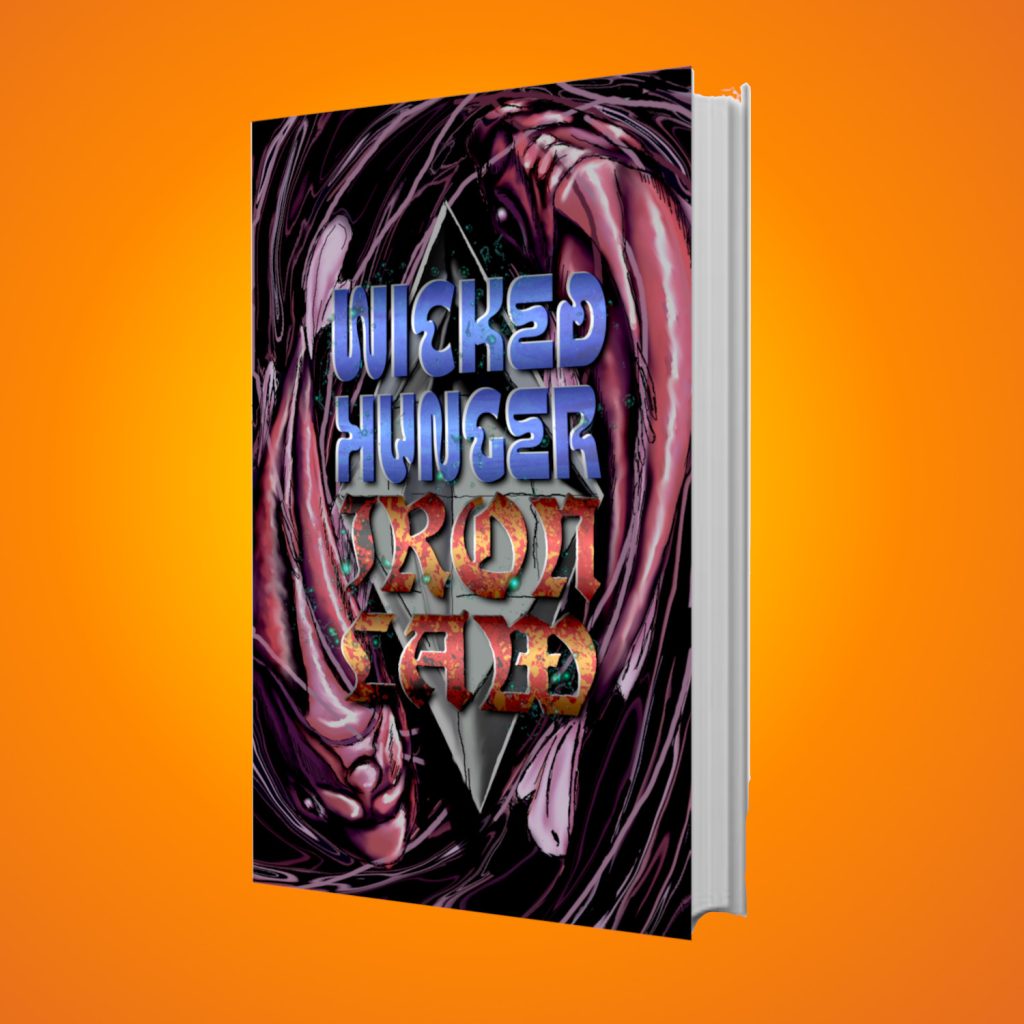
I don't really write fun and flirty stories. I like my works to have some grit to them. I also prefer them to be more or less true to life. So, in Wicked Hunger Iron Law, there are two romantic entanglements. One relies on gay sex and intimacy as symbolic acts of liberation. The couple begins from a place of anonymous exploration as a tool of survival, and then expands on that until a pivotal moment decides them on fleeing the commune they've grown up in together, choosing truth and happiness over a mask. In the other, it is exactly that mask, the unmet needs of one party, and the absolute need of the other to maintain cover, that bring things to a head. The ending, I suppose, is both revelatory and bittersweet, but the point was not to make something easy. It was to emphasize the struggle of the queer man, while also shining a light on how powerful and strong we must be to live our truths.
In Adrien's relationship with Lucienne, you see a hopeful young man being led by the nose into a complicated dynamic with an older guy who cares about him in a sense, but will never place him above the need to maintain the mask on his list of priorities. Lucienne has a wife who loves him, and he loves her in his way as well; but he isn't attracted to women, and this lack of attraction sits at the heart of their relationship. More, he does not believe he would make a good father, and so weaponizes his connection to Adrien to prevent himself from becoming one. This central tension is explored in great detail throughout their arc in Wicked Hunger Iron Law, and is juxtaposed against a relationship built on trust, intimacy and eventual honesty, as seen in Luke's budding romance with Oliver. With a Kindle Unlimited subscription, you can see exactly how these dynamics play out, how faith shapes these relationships, and the impact a rejection of faith has on both couples as they navigate the complications in their love lives either together, or in opposition to each other. At their core, these relationships center around meeting each other's needs. When one couple is able to engage in this kind of mutualism, their relationship flourishes. When the other cannot...well, you'll see what happens.
Religiosity shapes the way we interact with the world, but when a core feature of your identity is demonized, it becomes impossible to reconcile the teachings of your faith with who you know yourself to be. This central tension is what ultimately leads so many of us to come out of the closet, when we realize that we are not bad people, and the central condemnations of our faiths are not fair to us. At the same time, this downward pressure to conform, which is disproportionately placed on our shoulders, while other alleged sins are generally excused as more forgivable even as they are also more damaging to others (adultery being the one that comes to mind), is ultimately what causes rampant issues with depression and suicide ideation in us as teens and young adults. I didn't focus on those matters when I was writing this book, instead choosing to focus on the yearning of these characters for something better than they currently have, the comprehension for what it would cost them (their relationships with their families who are entrenched in this cult), and the central tension surrounding choosing love and acceptance over the mask. These themes are all intimately linked to the experiences of queer youth. We have all been through some variation of this, even if the context behind the feelings was not directly linked to being involved in a religion that actively condemns us.
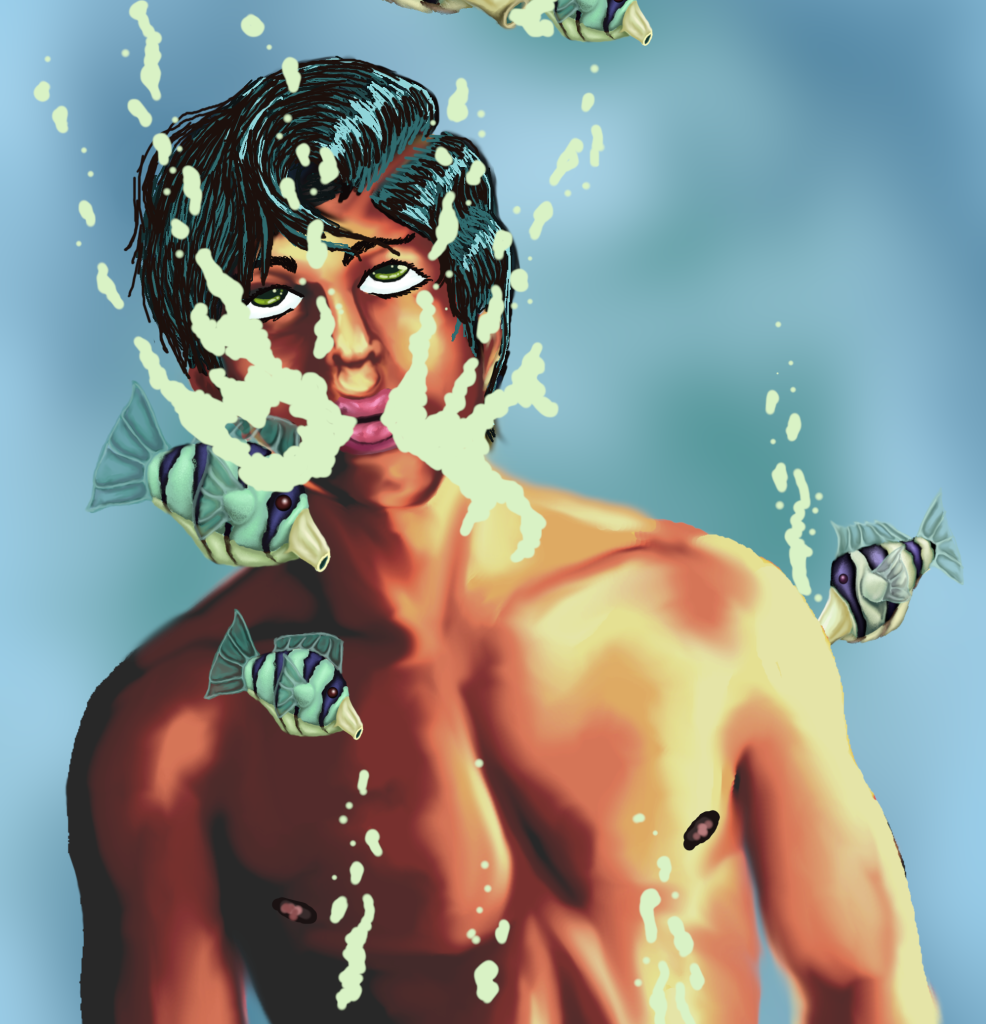
Sex and intimacy, then, are presented as quiet forces of liberation, and I think that's true to our lived experiences, as well. We choose love, and learn to live our truth, when we come out of the closet. However, it is a toxic kind of love that defines everything that comes before that moment. Love from our families, who believe the way to express that love is to push us back onto a narrow path which will lead us to their idea of a happy life (finding a person of the opposite sex to be with, getting married, starting a family, putting down roots). Their faith has shaped their perception of reality, but it misses the forest for the trees so often, because this cookie cutter idea of a happy life is anathema to those of us who can't conform; and so often the choice we are faced with is: find happiness on the other side of the closet and potentially lose our families and friends in the process, or remain in this miserable state, living a lie, in order to keep the peace.
In Lucienne, you see the effects of the latter state of being in a middle-aged man who has shaped his whole way of life around maintaining his cover, up to and including exploiting young men, who he has a certain measure of power over, to keep his truth hidden. In Oliver and Luke, you see the deep desire for freedom ultimately deciding them on taking the other path, choosing to build the proverbial house together, in which they can live freely in their true identities, or at least identify who they are when the mask is removed.
I'm writing the next book right now, and I'm leaning into something I don't often see in books about queer identity. I'm writing this book from the perspective of people who have chosen to leave the closet, or whom have been pushed out of it in some way. Core to this sequel: the struggle and the joy inherent in self discovery. Our journeys don't end at coming out of the closet. When we do, it is often with the expectation that we will figure it all out rapidly and become the butterflies we were always meant to be. There are so many things we miss out on in our childhoods and teen years, though. First kisses, first partners, being able to just live in our own skin without the burdens of a society that actively penalizes us for failing to conform to well trod gender roles and forms of expression. After coming out, there is a need to unpack the trauma of the closet, identify what is us, and what is the mask, shed the things that helped us maintain cover but which don't serve a purpose anymore, and embrace those things about us we suppressed in order to conform. Book two is about exactly this. There is no shortage of spice there, either, but core to the story is just this: what does it truly take to become who we were meant to be? What does life look like on the other side of the door?