Glimmers in the Dark: Coming Together in a Harsh World
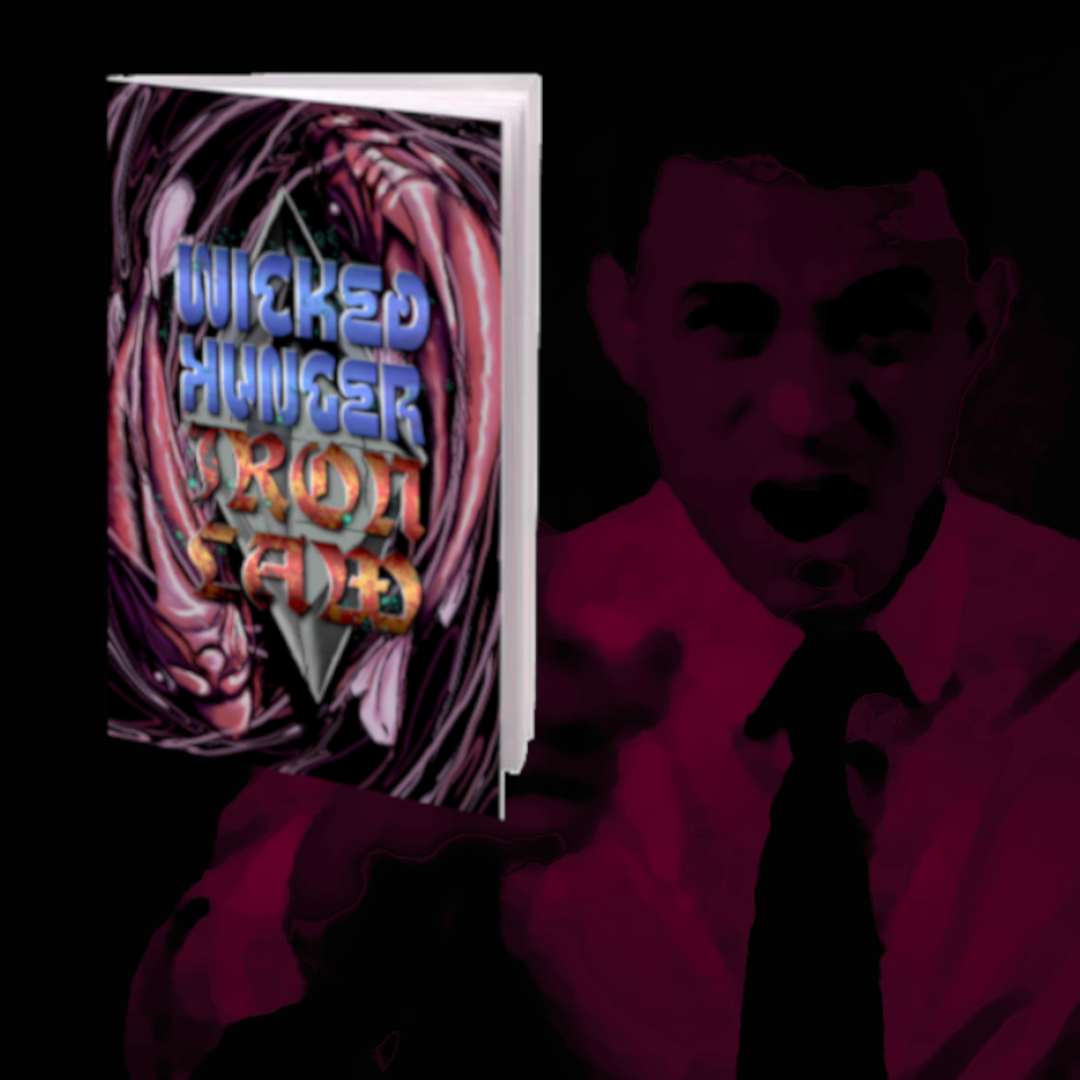
Today, we're going to focus on Luke and Oliver. If you've read the Hive Omnibus you received upon signing up for this newsletter, you'll be familiar with Luke (a version of him, at least). Oliver was never included in that material...was, in fact, created for Wicked Hunger Iron Law kind of by accident.
I had originally intended to introduce Luke and Dylan in much the same fashion as I had in that series of shorts, and then focus on just those two; but plans change, and the result was...well, it was better.
Intimacy, Tenderness and Yearning

In the dynamics between Luke and Oliver, you find mutual explorations of sexuality. By the time you arrive at the first sex scene between them (The Red Light District, p. 64), Oliver is already well on his way to leaving Iron Fundamentalism, but certain self-imposed responsibilities have kept him from truly leaving. He has siblings (one teenage sister, and two kid brothers), and he views himself as a bridge between them and his mother, keeping the peace and holding the family unit together. In this role, he also serves as a check on his mother's worst impulses. There is, then, an immense and profound capacity for love within him; though, as a parentified child, it comes with its own struggles.
Oliver did not grow up in Iron Fundamentalism. He has had a taste of the outside world. His mother converted for reasons associated with a failed relationship that ended on a bitter note, and this turn of events is something he has had difficulty forgiving her for, as she took those sentiments, post breakup, and channeled them into seeking out some form of spiritual enlightenment; and that ultimately came at the cost of his ability to live his truth.
You might find this relatable.
Most of us don't choose the religion we end up practicing, if we practice one at all. Those choices are made for us by our parents, and stay with us throughout our lives. Be it that the religion of choice is one of the mainstream ones like Catholicism, Suni or Shia Islam, Mahayana Buddhism, etc.; or a something more cult-like...like FLDS, Scientology, or the Nation of Islam, those choices are often made before we have a level of maturity necessary for critical thinking.
For queer people, in particular queer men, belief is so often a source of alienation, and coming out is made substantially more complicated because of it. If you have believed your final destination is hell, and you'll face eternal damnation for being who and what you are, the motivation to change at any cost is overwhelming, even suffocating. To then be dragged, kicking and screaming, into a faith that objectively hates who you are, at an age at which you are able to comprehend both that you are this thing they hate, and that there are other places in which you may be treated with respect and dignity while inhabiting this identity openly, the central point of tension shifts. There is less incentive to conform, and far more to escape.
You can see how this tension expresses itself in Oliver's dynamic with his mother and siblings in Wicked Hunger Iron Law (Airing of Grievances, p. 130). It's free with a Kindle Unlimited subscription.
Enter Luke
The Soul Fire Festival, an annual event at which the young men this story follows will be tasked with finding a suitable woman, through ritual dance, whom they may one day marry, is around the corner. Luke is having reservations about what it might mean for his life, if he continues to choose the mask over liberation. He still wants to believe that if he prays hard enough, his sexuality will change, and he will be "normal". Dance practice, an alley outside shielded in misting rains, becomes the location of an unexpected meet cute with Oliver, who noticed him pining after him when they were both practicing their dances earlier on. (The Fire Dance, p. 30)
A meet cute becomes a tender moment in which both men feel, for the first time, that they can allow themselves to be vulnerable with another man, ultimately exchanging aliases as a means of defense against the possibility of being outed. If one of them is compromised, the other continues to have a fighting chance at survival within the faith, under this system. So the aliases are both a defense and a selfless act, as they erase their identities so that they can find belonging in each other.
Togetherness is a Journey
And progress isn't always linear.
In the closet, men experience a certain amount of fear in relation to exposure. There is the very real sense we may lose something by being ourselves, and the tipping point tends to be a limit having been reached, which differs in its nature from person to person.

In the case of Luke and Oliver, the tipping point does eventually arrive, leaving them to choose life in the open, or sustained oppression for the sake of maintaining relationships within their community. For both men, the bonds they share with their families are what keep them still. (The Soul Fire Festival, p. 186)
But finding each other allows them to carve out an oasis away from the commune they grew up in, to carve out a space and inhabit it as themselves. Though they may not know each other's real names, that level of anonymity allows them to be authentically themselves in other ways, ultimately building toward a closeness neither of them has allowed themselves to feel before, which might just create the foundation for a stable relationship later.
Oliver continuously tells himself they're building a house, not a lean-to...a phrase remembered from his past life outside of the commune, which was uttered by the father he does not want to be like. He views his budding romance with Luke as something that could potentially survive between them, and that wanting leads him to forgive Luke a moment of indiscretion after their first hookup, when Luke's religious guilt overwhelms him, causing him to act in a way that makes Oliver question whether he has the capacity to live his truth.
"We're building a house, not a lean-to."
Luke and Oliver ultimately do decide to meet again, after the Soul Fire Festival, when they believe it will be possible to spend a night together, go on a real date, and get to know each other in a way that wasn't possible before. By this time, Oliver has purchased civilian clothes to help Luke blend in with the citizens of Orfeis, but they have not decided to leave the faith behind yet.
Though Luke is still grappling with the beliefs long instilled in him, he is ultimately coming around to the idea that what the faith describes as Juba's poison, is anything but that, and this sense of closeness, this budding romance, is worth exploring, even if it does mean forsaking everything he has ever been told.
Sincerity: How the Caged Bird Sings

Tonally, this book is full of angst and longing. It tells the stories of three young men grappling with their sexualities in the context of a hardline cult, but their stories feature tender moments of intimacy throughout.
Sincerity is at the core of their interactions with each other. Though Adrien only ever has brushes with Luke and Oliver, he is aware of them. His struggles are a bit different, and we'll get into that another time, but for Luke and Oliver, it is the choice to come together that defines their first touches (first kisses, first blowjobs, first acts of penetrative sex), and also their emotional beats (the alleyway confrontation, choosing to be vulnerable with each other, to meet in private, to set up a date; choosing forgiveness and moving forward, and eventually, choosing to reject faith in favor of living their truth).
"...for Luke and Oliver, it is the choice to come together that defines their first touches..."
In our lives, we find meaningful connections on the other side of the closet (find safety, mutual understanding, and connection in each other). Against such a harsh background, I felt a need to center these powerful choices, especially in Luke's relationship with Oliver, because they are true to life.
Despite existing in an often harsh world, we find ourselves thriving through love and intimacy so often. Despite all that bears down on us, we continue to look to each other for support, comfort, and a kind of healing that can only be obtained through accepting who we are, and finding acceptance for our true selves in those we choose. There is something both simple and profound in living our truths together. This year, with Pride Month just behind us, I find myself contemplating just how strong we are, how courageous an act choosing love can be.
Wicked Hunger Iron Law explores intimacy against the backdrop of a hardline faith that challenges Luke and Oliver in profound and complex ways, providing insights into what it might be like to grow into yourself within a homophobic cult, and exploring what it costs to reach for freedom, choose love, and leave the harmful institution you grew up in. You can see how that plays out as you read through the chapters at no cost if you download it with a Kindle Unlimited subscription.
As you read through the book, pay attention to the other characters you meet in the narrative, the ones the three men this story centers around focus on. They'll be relevant to the plot in future installments, as we broaden the lens to shed light on still others living secret lives in Iron Fundamentalism.