A Window into the Mind - Lance
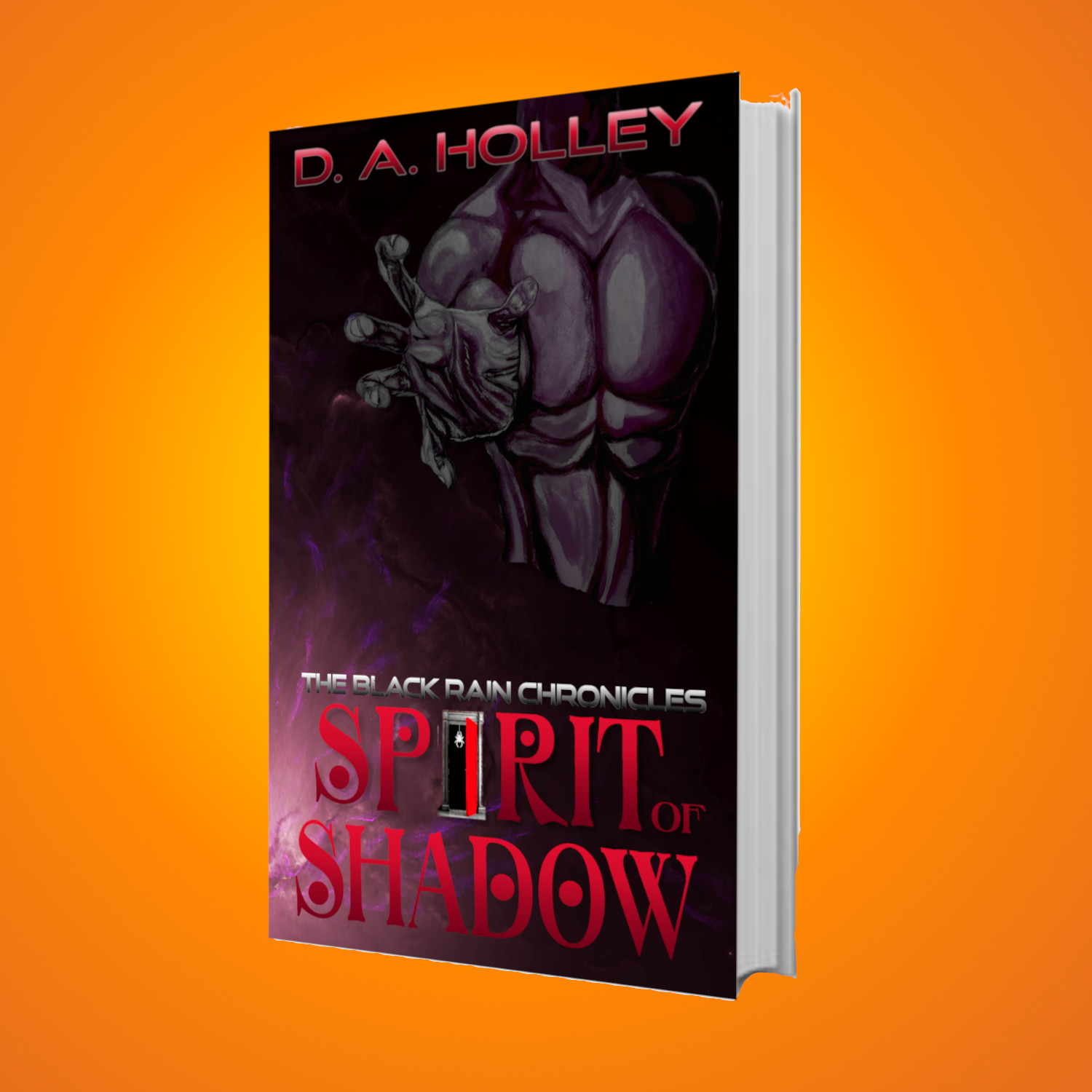
What we're doing today (and with this series of posts) is breaking down the psychological profile of an important character from Spirit of Shadow. I'll be doing this with characters from all of my books as time goes on, but we'll specifically focus on The Black Rain Chronicles for the next few months, because Broken Bonds (the second book in the series) is releasing on July 30th. With Spirit of Shadow being available on Kindle Unlimited or for purchase at the low, low price of $4.99, now is the perfect time to read it.
But setting that aside, let's get into the gritty details of how systems in a deeply troubled character's past impact his present behavior. For purpose of keeping this all clean and more or less precise, we're going to use framing language derived from CBT (Cognitive Behavioral Therapy) and Schema Therapy to examine the present behavior of the character, and identify critical complexes in the formation of his identity and habits as a child.
Attraction and Desire: A Closed Feedback Loop
Now, Lance is relatively high functioning. You might consider him to be fairly well adjusted when first you meet him in Spirit of Shadow. He clearly has anxiety, and that draws from a few sources. The least complicated of those centers around navigating the social structures in his immediate environment as a gay man.
It is noteworthy that he is not closeted and has not been for quite some time, but has also not engaged with romantic relationships prior to the beginning of the story, and associates a certain amount of shame and envy with his sexuality. The shame stems from a system of belief which associates his attractions to other men with instability in past relationships with other loved ones. He favors romantic isolation as an indirect result of a childhood spent believing his parents gave him up to the palace voluntarily. Feelings associated with this abandonment trigger the Defectiveness/Shame Schema, which reinforces the idea that he will be alone because he is of little value to others. Offering further complications, some of that shame is associated with a perception of other men which does have its basis in fact, but globalizes the core truths inherent in a dynamic to eliminate nuance.
The thought process amounts to "I shouldn't look at other men because they will become hostile," which is reinforced by the idea that appearing to be attracted to these men may lead to dangerous scenarios for him. This belief being warped to disproportionate extremes ultimately causes him to avoid seeking out potential partners entirely, with the understanding that if he does not seek out romantic attachments, he will avoid the potential for hostility from heterosexual men in his environment, and thus maintain his own safety and security. This comes with a certain amount of body dysmorphia closely associated with feelings of inadequacy which create a negative feedback loop in which anxiety surrounding his apparent inability to develop romantic attachments leads to self policing behaviors surrounding expression of attraction to others, which feeds back into that anxiety by becoming a self-fulfilling prophecy.

"I am incapable of forming attachments" follows from "my attraction to other men is a source of danger", which informs the behavior of avoiding eye contact and looking at men in general, and a secondary pattern of avoidant behaviors surrounding intimacy, and preemptive rejections of the advances of men who might be interested in him. This cycle then fuels feelings of isolation and defectiveness, which trigger shame when he unintentionally breaks the rules he has established as a self-policing mechanism in order to avoid the perceived danger associated with his attractions, and further reinforces the warped view "I am incapable of forming attachments."
This feedback loop ultimately informs that secondary source of anxiety which presents itself as envy, triggering feelings of anger which are directed inward and expressed in a pattern behavior of shutting down emotionally, or seeking outlets which allow him to distract himself from those negative feelings. This secondary loop is triggered by questions like "why can't I be normal?" and "why am I not like my peers?", which tie directly into his relationship with sexuality and attraction, and are informed by the aforementioned cycle of cognitions.
But again, this is the least of Lance's problems, and feeds into a broader system which has its roots in systematic, operant conditioning to select for specific traits, which started when he was just three-years-old and has continued to be reinforced throughout his adolescence.
The Blueprint: How Childhood Trauma Shapes Lance's Cognitions
First, let's define a couple of terms for those of you who don't have some familiarity with psychology.
Schema: an associative theme, often developed during childhood, which we identify with a core concept. Schemas help us gather relevant information surrounding an idea. For context, when you go to a movie theater, you generally don't have to ask questions about what you need to do there. A schema associated with the concept "movie theater" informs your decision making and perceptions: pick a movie, get tickets, go to concessions, get snacks, drinks and/or popcorn, find the right room, settle back, turn down the volume on your phone, watch the movie. You know how to navigate in this environment because of readily accessible knowledge that your brain has associated with it. But schemas can also be associated with positive or negative, formative moments in your childhood, and may define pattern behaviors later on which are often maladaptive responses to stimuli faced at the time, and may even be triggered inadvertently by present stimuli.
Modes: Modes are psychological and emotional states that can be triggered by certain schemas. Modes like Punitive Parent and Vulnerable Child derive their character from instability in childhood and follow us into our lives later on. A Punitive Parent Mode, once triggered, may see us lambasting others with undeserved criticism, or expecting an unreasonable level of performance from others or ourselves, and in the latter case may come with negative thoughts that attack our sense of self worth.

So, I can only get so deep into Lance's character profile without giving you major spoilers for what happens in the book, and because of that, I'm going to do a lot of explaining the "what" and not the exact "why" here; but suffice to say Lance's early perception of his role in the palace are challenged when he begins to awaken to the truth surrounding his place. Not voluntarily abandoned but taken, his perceptions are systematically dismantled as he shakes off the programming that has allowed him to function in this environment throughout most of his life. The truth revealed, the lies he has been told reframe his cognitions, and he faces a personal upheaval as a result.
In the beginning, Lance views his queen and certain members of the aristocratic order almost as parental figures, believing they are mostly benevolent forces in his life, and a handful of them may be bad actors, but he can prevent their bad behavior from affecting him if he presents himself as submissive and compliant. He views his position in the palace as inherently better than what his parents could have provided him, but nonetheless holds onto some negative feelings associated with their ultimate decision to part with him. These cognitions stem from a combination of factors that are associated with the actual treatment of him in early childhood, but are buried under a layer of conditioning that has allowed him to associate certain negative schemas with perceptions of his captors as saviors, which are later dismantled.
A Mistrust/Abuse schema causes Lance to believe others will harm him intentionally in some way, and stems both from his observation of how the nobility often interacts with the servant class, as well as his own mistreatment as a young child, memories of which have largely been displaced by the time the story kicks off. A Defectiveness/Shame schema is triggered by his initial abandonment, and informs feelings of inadequacy or inferiority, as well as a perception of being unwanted or otherwise incapable of being wanted (which is primarily associated with romantic attachments). A Subjugation schema associated again with dealing with frequently hostile and unpredictable adult figures in his life leads him to believe he must surrender control to his superiors and handlers in order to avoid anger, retaliation or abandonment. And a Dependence/Incompetence schema finishes out his cognitive and behavioral base by informing perceptions that he cannot survive outside of the palace ecosystem.
These behavioral patterns stem from a critical event in early childhood which is a source of trauma, which he has dissociated from to the extent he no longer remembers those details. Much of the plot of Spirit of Shadow is framed around him becoming reacquainted with those negative memories, and how his cognitions are reframed by this resurgence of memory for that formative event.
Cognitive Patterns: How The Blueprint Informs Lance's Worldview
Level One: Core Beliefs
As we progress through the story, Lance's perceptions shift in response to new information, and he is led down a rabbit hole that leads to violent rebellion, even as his intention is simply to escape this system and its oppressive structures, in order that he can be free. At the beginning of the story, he views himself as a person who is loved, or at least accepted, by the body of his oppressors, and who is being provided for by them in a way he would otherwise not be. This view is later dismantled and replaced by the notion that he is, in fact, a captive and a slave, and those he viewed as his saviors are actually an oppressive body directly benefitting from a submissive and well maintained staff who are largely ignorant to the truth.
Level Two: Conditional Beliefs
These "if-then" beliefs inform behavioral patterns in Lance that are predicated on the base of core beliefs and associated schemas that have followed him throughout his life, and evolve to accommodate the new information that threatens his worldview with collapse. He believes there is safety in performing immaculate service, being the invisible gear that keeps the machine functioning, and this informs a pattern of behavior that prioritizes subservience, cooperation and surrender. The belief is, more or less "if I perform well and go unnoticed, I will prevent bad things from happening to me." You might think of this as a compliance rule.
A cognitive rule associated with the resurfacing of these memories, and perceptions of danger associated with being seen to possess this information, leads him to believe the simple act of remembering may lead to negative consequences. "If they know I know what I know, they will make me disappear."
Last, a perception that his friends and peers will turn informant for the apparatus that handles making those who know the truth disappear leads him to police his own behavior and choose isolation (at first). External forces ultimately help him shake off this belief, which is how we find ourselves embroiled in a rebellion against the status quo. The perception, then, is that if he tells others what he knows, they will choose the security provided by complying with the system as it stands, over his personal safety.
Level Three: Automatic Thoughts and Cognitive Distortions
Lance is prone to hypervigilance and catastrophizing, and becomes more prone to this behavior as the narrative moves forward. While he does ultimately grow in such a way as to displace those thoughts in favor of what are, perhaps, healthier cognitions, this pattern of cognitions causes him to believe he will be discovered and made to disappear because the mechanisms of surveillance in the palace will inevitably lead to his discovery. Effectively, the belief is: "they know I know the truth, and they're coming for me."
Informing a series of poor decisions later in the book, a resistance to trusting an ally which ultimately makes life harder for both of them, is a secondary warped cognitive pattern associated with a body of guards he has long experienced a sourceless fear for. Though he does not initially understand why this fear exists, the belief is that these guards will harm him in some way, which is predicated on the fear response itself. Rationally, he knows he will not be harmed because he has not been harmed before, but the edge of fear takes on a new meaning when he begins to awaken to those forbidden memories of his past, and the web of distorted cognitions that has kept him safe for all of these years begins to unravel.
Lance also engages in mind reading behavior, making assumptions about what his close friends will think and how they will behave, if he confides in them about what he is experiencing. Again, he does eventually begin to open up about these things, but it takes substantial effort on his part to overcome those cognitions, and then just to build up the courage in a moment of desperation to tell one person. These thoughts are centered around the idea that his friends will turn him in, viewing the safety of the palace hierarchy as more important than his personal safety, and also viewing his confession not as a sign he has stumbled onto the truth, but as a sign he is becoming untethered from reality, and may need to be reported like those others who have disappeared after having similarly unraveled.
These warped worldviews are further reinforced by a distrust of his own sense for reality as, while this is going on, he is also hearing voices and experiencing headaches and dizzy spells in the presence of magic users, all things he believes to be interrelated and signs he cannot trust his own conception of reality, or his framing of the condition of his service. In his mind, it may well be that he is going a little crazy and needs to be handled accordingly, until evidence arrives to inform him that what he is going through is not, in fact, the development of a schizoidal disorder, but rather a reawakening to buried truths.
A Servant For Whom Perception Is Everything

Lance is just one of many complicated characters in The Black Rain Chronicles, and his growth arc does see him change substantially as the story progresses. You'll find his story provides an easy access point into this grimdark world, a slow burn romance set against the backdrop of a high stakes rebellion plot in which a rag tag group of servants with subpar educations, rudimentary command of magic and no formal military training unravel the web of deceit surrounding their place in the palace hierarchy, and join with more powerful mentor figures to plan their ultimate escape.
Spirit of Shadow is a coming of age tale that provides no easy answers to the complex problems surrounding Lance and friends' ultimate plot to liberate themselves from the yoke of servitude. Read it before the sequel comes out on July 30th.